Iran Expands Land Trade Corridors as Regional Tensions Disrupt Maritime Routes
Recent developments in West Asia have extended beyond military confrontations, increasingly reshaping regional economic and trade dynamics. Escalating tensions and restrictions on key maritime routes have disrupted traditional transportation channels, prompting countries in the region to seek alternative trade pathways.
Following U.S. efforts to intensify pressure on Iran through naval measures in the Persian Gulf and the Sea of Oman, concerns grew over the security of commercial shipping and the continuity of regional trade. The restrictions affected not only energy exports but also the movement of essential goods and commodities across regional markets.
In response, Iran has accelerated efforts to strengthen land-based and railway transportation networks with neighboring countries. Tehran has focused on diversifying its trade routes in an attempt to reduce dependence on southern maritime corridors and maintain access to strategic imports and exports.
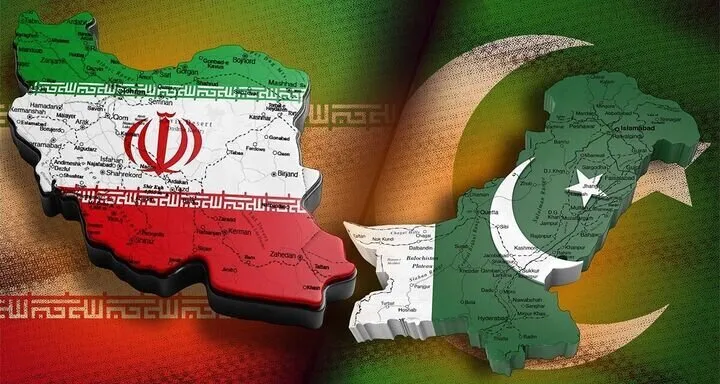
Pakistan has emerged as a key partner in this strategy. Islamabad, which maintains close diplomatic ties with Tehran, recently authorized expanded transit cooperation that allows goods from third countries to enter Iran through Pakistani territory. As part of the initiative, six land transit routes were opened and a new road corridor linking the two countries was officially launched.
The designated routes connect Pakistan’s major ports — including Karachi, Port Qasim and Gwadar — to Iran’s border crossings at Gabd and Taftan. The corridors pass through several Pakistani cities, including Turbat, Panjgur, Khuzdar, Quetta and Dalbandin.
Officials and analysts say the Gwadar-Gabd route is among the most efficient options, reducing travel time to the Iranian border to just a few hours while significantly lowering transportation costs compared to conventional maritime logistics.
At the same time, Iran has expanded rail cooperation with China. Freight services between Xi’an and Tehran have reportedly increased from one train per week to multiple weekly departures, reflecting growing demand for alternative supply chains amid regional instability.
Regional analysts view these developments as part of a broader trend toward trilateral and multilateral cooperation involving Iran, Pakistan and China. According to experts, the latest geopolitical tensions have accelerated interest in regional connectivity projects and strategic transit partnerships.
Farzad Ramazani Bonesh, a senior regional affairs analyst, said recent events have highlighted the importance of new economic corridors linking South Asia, Central Asia and the Middle East. He noted that expanding transport infrastructure and activating projects such as the Zahedan-Chabahar railway demonstrate efforts by Tehran and Islamabad to deepen economic and transit cooperation.
Analysts also point to uncertainty surrounding trade relations between Iran and the UAE as another factor driving attention toward Pakistani ports. Under current conditions, ports such as Karachi and Gwadar are increasingly viewed as viable alternatives for regional commerce.
Despite the growing importance of land and rail routes, experts caution that overland transit cannot fully replace maritime transportation over the long term. While alternative corridors may help mitigate part of the economic pressure on Iran, sea routes remain essential for large-scale international trade and energy exports.
Nevertheless, recent developments underscore Iran’s strategic geographic position and its ability to leverage regional connectivity to reduce the impact of external restrictions. Observers say the expansion of transit corridors demonstrates that, despite mounting geopolitical pressure, Iran remains integrated into regional trade networks rather than isolated from them.