Strategic Waters: Why the Strait of Hormuz Is Central to Iran’s New Playbook
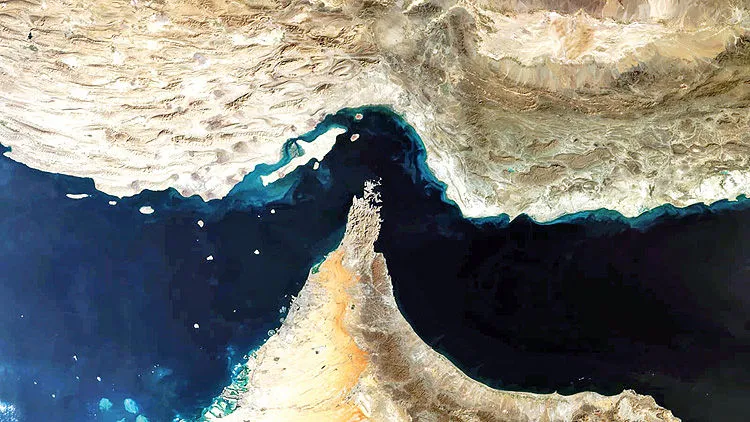
The Strait of Hormuz, long considered one of the world’s most critical geopolitical chokepoints, is entering a new phase in both function and perception. Traditionally defined as a key artery for global energy flows, the narrow waterway is now being reinterpreted by Tehran as a multidimensional strategic asset rather than merely a corridor for oil shipments.
Recent statements by commanders of Iran’s Islamic Revolutionary Guard Corps Navy suggest that this shift is deliberate and irreversible. Their assertion that the strait “will not return to its previous state” reflects a broader transformation in Iran’s strategic outlook—one shaped by recent security developments, accumulated operational experience, and evolving policy priorities. Within this new framework, the Strait of Hormuz is no longer seen simply as a transit route, but as a structure of power.
This transformation is also evident in policy discussions within Iran’s political system. A proposal put forward in the Iranian parliament indicates a move away from the traditional approach centered on maintaining safe passage. In its place, authorities are advancing a more active and layered model that incorporates economic, environmental, and developmental dimensions. The objective is to leverage geography not only for crisis management but also for generating long-term strategic advantage.
A key aspect of this shift involves redefining maritime security. Rather than acting as a passive guarantor of transit safety, Iran is seeking to position itself as a central authority in setting and enforcing the rules governing passage through the strait. This change in role could carry significant implications, particularly in a region frequently affected by instability.
Economic considerations form another major pillar of the strategy. Proposed measures include imposing environmental charges on vessels that contribute to pollution, collecting fees for navigation and pilotage services, and establishing financial mechanisms to manage these revenues. Such steps point toward transforming the strait into a structured and reliable source of income, illustrating a model in which geopolitical positioning directly translates into economic gain.
The plan also envisions the creation of a regional development fund. If implemented, this fund would allocate revenues derived from the management of the strait toward infrastructure and development projects, particularly in Iran’s southern coastal regions. This initiative is significant both for strengthening the link between security and development and for enhancing domestic support for the broader strategy.
Beyond its operational and economic dimensions, the redefinition of the Strait of Hormuz carries important symbolic and strategic implications. In the past, the strait was often framed as a tool of deterrence—an option that could be activated in times of crisis to disrupt global energy supplies. The current approach signals a shift from this reactive posture toward a model based on continuous management. In this sense, the strait is being transformed from a temporary lever into a permanent and adaptable instrument of power.
This evolving role has attracted increasing attention abroad. Some Western media outlets have described the strait as an “economic weapon” in Iran’s hands, reflecting a growing recognition of its potential influence over global energy markets and trade routes. In a world where energy dependence remains a defining factor in international relations, effective control over such a chokepoint can rival, and at times exceed, the impact of conventional military capabilities.
The shift also aligns with broader trends in Iran’s regional strategy. These include efforts to expand strategic depth, strengthen economic resilience, and reduce vulnerability to external pressures. Within this context, the Strait of Hormuz has become a focal point where multiple strategic objectives converge.
Observers note that this transformation is unlikely to be easily reversed. Changes in threat perception, ongoing regional tensions, and the imperative to maximize the use of geographic advantages all reinforce the current trajectory. Increasingly, the strait is being viewed not just as a physical location, but as a dynamic factor shaping the future regional order.
Recent security developments involving the United States and Israel have further accelerated this shift. Attacks on infrastructure, threats against critical facilities, and attempts to escalate tensions have reinforced Tehran’s assessment that previous frameworks are no longer sufficient. Under these conditions, adopting a new approach to the Strait of Hormuz is seen as a strategic necessity.
In this context, Iran appears to be integrating the strait more deeply into its broader response doctrine. Whereas it was once primarily regarded as a deterrent option in times of crisis, it is now emerging as a постоян and active component of national strategy. The message conveyed is that any escalation against Iran could lead to a reconfiguration of the rules governing one of the world’s most vital economic arteries.
As a result, the Strait of Hormuz is no longer merely a geographic passage. It is evolving into a central instrument in the balance of power—one capable of influencing global energy security, trade dynamics, and the strategic calculations of major powers.