Scientists warn of growing gap between AI and human biology
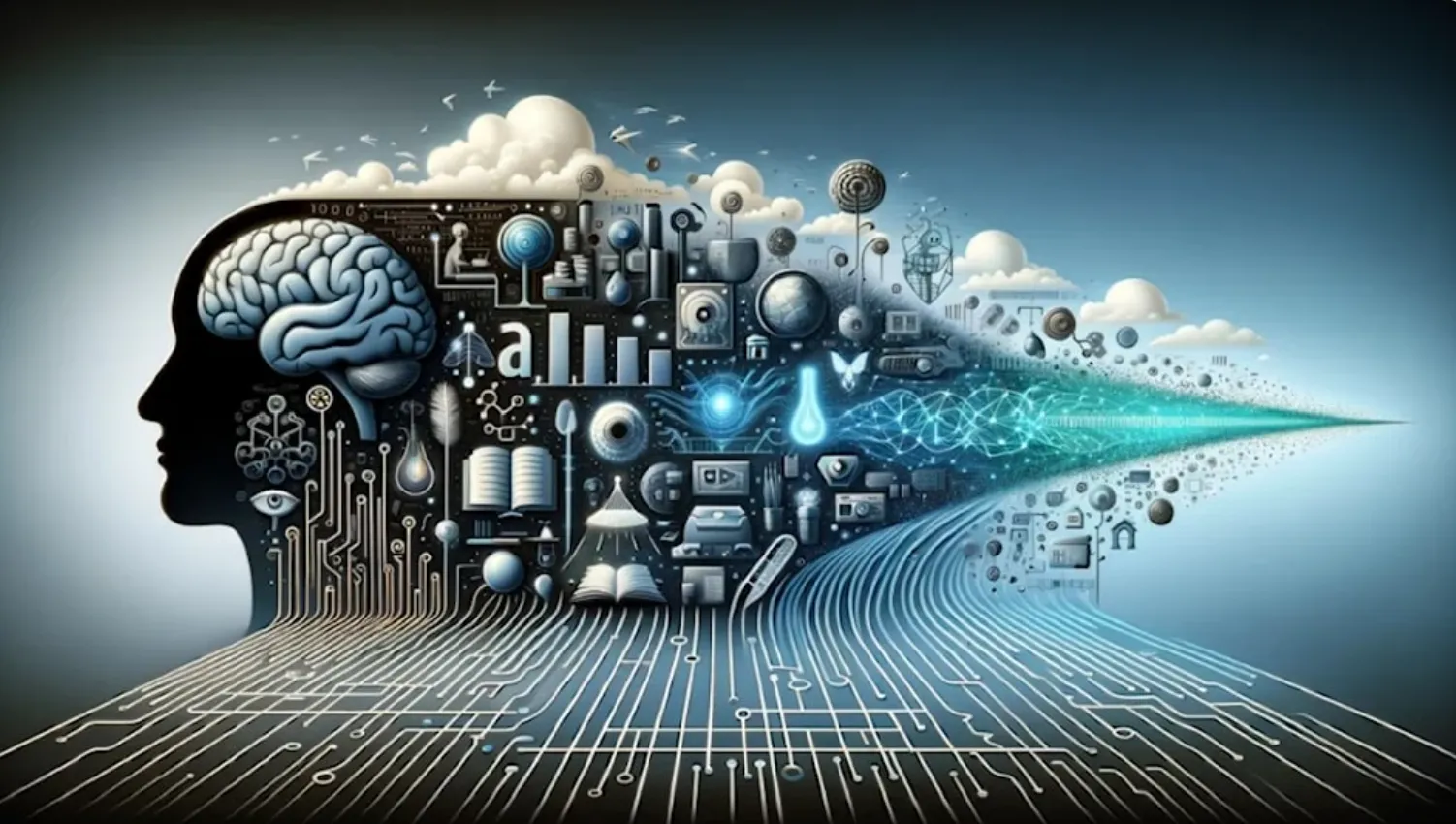
A new analytical study published in Science China Information Sciences warns that the rapid convergence of humans and artificial intelligence could create profound social and ethical challenges—not because machines may rebel against their creators, but because AI is evolving far faster than the human brain.
The researchers noted that the human brain develops on a biological timescale spanning thousands of years, while AI systems can undergo major updates within months or even weeks. They described this mismatch in the pace of development as one of the major challenges humanity could face in the coming years.
The Human Brain: A Stable Biological System
According to the researchers, the human brain reached essentially its modern form around 300,000 years ago, with its fundamental structure and mechanisms of neural signaling remaining relatively stable since then.
The brain operates on roughly 20 watts of energy, while neural signals travel at speeds ranging from about 1 to 100 meters per second. Neurons typically fire at rates of around 100 to 200 times per second. The skull and metabolic constraints also impose natural limits on processing speed and working memory.
Although the brain can adapt through neuroplasticity, these changes occur gradually as neural connections are reorganized, making it difficult for human biology to keep pace with accelerating technological development.
AI Can Evolve Within Weeks
AI systems, by contrast, are advancing at a much faster rate. Modern models can coordinate tens of thousands of processors and be redesigned and deployed globally within weeks.
This speed, however, comes with substantial costs. Training large-scale AI models requires enormous amounts of energy and advanced computing infrastructure in data centers.
The researchers refer to this disparity as a “development-rate mismatch,” in which technology advances faster than human biology and social institutions can adapt. They also propose the concept of “surpassing natural selection,” in which technology is used to enhance human capabilities at a rate far beyond that allowed by conventional biological evolution.
When AI Moves Beyond the Screen
AI has long been confined largely to the digital world, processing text, images and software. Advances in robotics and bioelectronics, however, are increasingly removing the barriers between digital systems and the physical world.
The researchers describe this transition as an “embodiment threshold”—the point at which AI becomes part of a direct interaction loop with the human body or nervous system.
The process ranges from wearable devices that monitor biological signals to brain-computer interfaces capable of directly reading neural activity.
Flexible bioelectronics could serve as a key link between AI and the human body, prompting researchers to develop flexible, self-healing materials and advanced electronic textiles.
Examples include smart fabrics capable of monitoring glucose and cortisol levels, artificial larynxes that detect muscle signals, and implantable electronic systems delivered through blood vessels to access the brain’s motor cortex.
However, these technologies still face challenges involving large-scale manufacturing, biocompatibility and reliable power sources.
Risk of a New Social Divide
The study warns that greater convergence between humans and machines will not automatically lead to a better future. Access to such technologies is likely to depend heavily on economic resources and supply chains.
The researchers call the potential outcome “biotechnological stratification,” warning that if technologies designed to enhance cognitive and physical abilities are controlled by a small segment of society, inequality could evolve from an economic divide into a divide in human capabilities themselves.
They also warn of threats to neural data privacy if brain signals become routinely collected, traded and treated as consumer data.
How Can the Risks Be Addressed?
The researchers propose a gradual regulatory framework based on the level of technological development rather than fixed timelines.
The first stage would establish transparency standards, including disclosure of computing capabilities and training-data sources during AI development.
After the embodiment threshold is reached, the focus would shift to the safety of human-machine interaction, including ensuring that users retain the right to shut down a system at any time.
The third stage would involve stronger international governance through cross-border oversight mechanisms, drawing on models such as CERN and the International Atomic Energy Agency. The goal would be to prevent a small number of companies from monopolizing critical technologies.
Putting Humans First
The researchers conclude that the study’s main purpose is not to predict the future of AI, but to put humans back at the center of the debate.
Rather than focusing solely on maximizing machine capabilities, they argue, technological development should be directed toward enhancing human abilities while establishing safeguards that ensure people remain in control of decisions shaping their future.