Researchers develop AI model to predict pancreatic cancer risk
The findings were presented at the 2026 Clinical Congress of the American College of Surgeons, held in Washington from September 26 to 29.
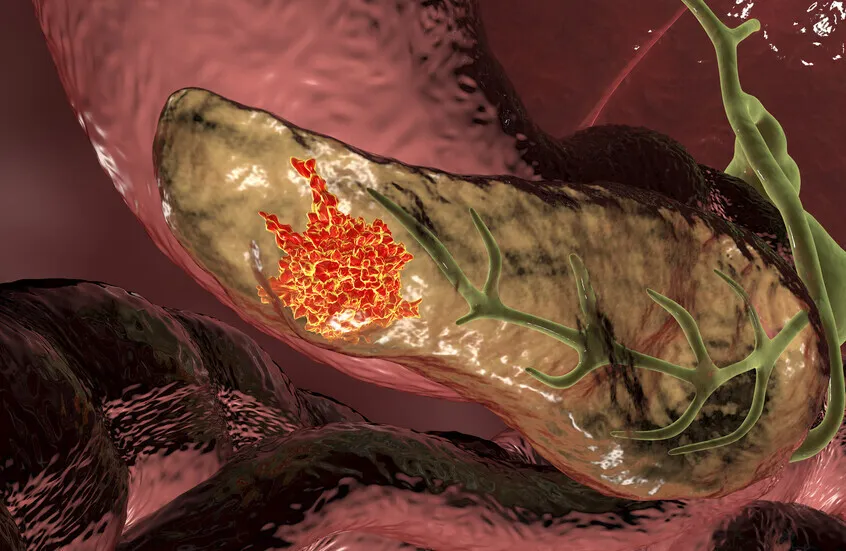
Pancreatic cancer is relatively rare but highly lethal. It is often diagnosed at an advanced stage because its early symptoms can be difficult to detect.
“Pancreatic cancer can be curable, but only when we detect it early, and fewer than one in five patients are diagnosed in time,” said Cornelius Thiels, a surgical oncologist at Mayo Clinic and co-author of the study. “As a result, for many patients, survival after diagnosis is still measured in months rather than years.”
How does the model work?
Thiels said widespread screening for pancreatic cancer is not feasible, so his team sought to develop an AI model capable of identifying patients at the highest risk.
“We know that pancreatic cancer develops over five to seven years, but what the doctor or patient sees does not happen until it is too late,” he said.
The model, developed by Thiels, lead author Chris Varkey and their team, used patients’ longitudinal health records from the Mayo Clinic system and combined them with routine laboratory test results collected over an average of a decade or more.
The study dataset included 6,066 people with pancreatic cancer and 33,396 controls, with clinical records spanning 7.5 to 19 years. The researchers used the data to identify subtle signals that could indicate an increased risk of developing the disease at an early stage.
To assess whether the model could predict pancreatic cancer three years before the actual diagnosis, the researchers used three different measures, each addressing a specific aspect of the model’s performance.
The first measure asked whether the model could distinguish patients at risk from those who were not. It received a score of 0.853 out of 1.0, indicating a high ability to differentiate between people who would develop cancer and those who would not.
The second measure assessed whether the model’s risk warnings were accurate. It received a score of 0.712, indicating that its predictions were reliable in most cases and that it generated relatively few false alarms.
The third measure examined whether the predicted risk corresponded to the actual likelihood of developing the disease. The model received a score of 1.08, with 1.0 considered ideal, indicating that its risk estimates were close to observed outcomes.
“If the model says that someone has a greater than 50% risk, there is an 88% chance that they will actually be diagnosed with pancreatic cancer within one year,” said Chris Varkey, the study’s lead author.
This means the AI model can identify an elevated risk of the disease up to three years before diagnosis. The higher the risk estimated by the model, the more accurate its prediction of a diagnosis within the following year. In other words, the one-year prediction reflects how accurately the model performs when the estimated risk is high.
According to the researchers, the model can accurately distinguish people at higher and lower risk, generates relatively few false warnings and produces risk estimates that closely correspond to actual outcomes. These characteristics make it a promising tool for the early detection of pancreatic cancer.
“We built this to be as generalizable, scalable and practically deployable as possible,” Varkey said, noting that the data inputs used by the model are collected almost universally by hospital systems worldwide. “If it proves to work, it could be used in almost any setting,” he added.