New method enables real-time detection of underground vibrations
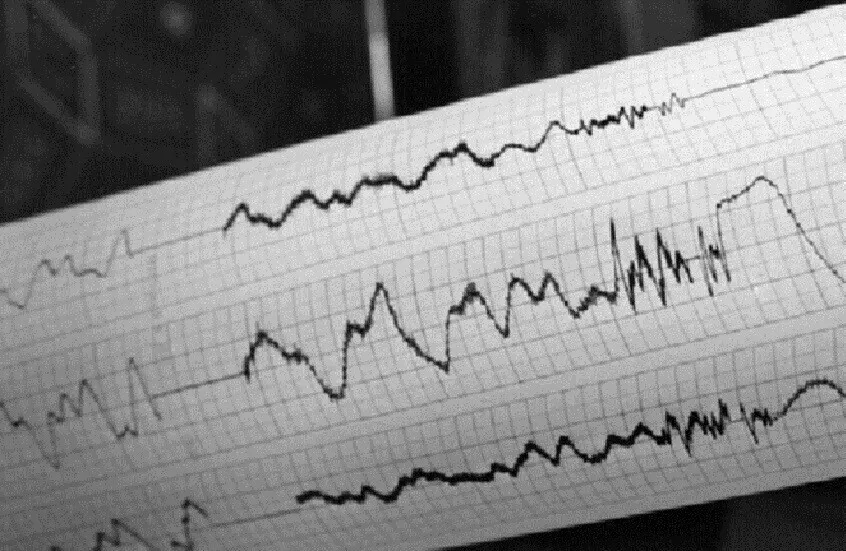
A team of researchers has developed an innovative mathematical model that can detect and locate hazardous underground vibration sources in real time through the use of small, inexpensive antenna arrays.
According to the National Research University’s press service, the technology could significantly reduce the risk of damage to buildings, roads, and other critical infrastructure located near mines and quarries.
Professor Sergei Nevidov of the Moscow Institute of Electronics and Mathematics explained that current mitigation measures are often implemented only after visible damage, such as cracks or structural deformations, has already occurred.
"In many cases, action is taken only after buildings show signs of damage," Nevidov said. "Our approach is different: first identify the source of the hazardous impact, assess the associated risks, and then implement the necessary preventive measures. This method provides rapid and highly accurate information, even when multiple vibration sources are present."
According to researchers from the university and the Institute of Comprehensive Exploitation of Mineral Resources, underground vibrations are generated not only by natural processes but also by human activities. Drilling operations, as well as the movement of heavy mining equipment, can produce seismic waves that propagate hundreds of meters through the ground and may eventually damage nearby structures and engineering facilities.
The newly developed system enables these vibrations to be monitored using relatively simple and compact antenna arrays, providing an alternative to expensive sensor networks and less accurate standalone monitoring stations currently employed in mining areas.
The technology relies on a mathematical model that identifies and isolates vibration sources by comparing measurements collected from several closely spaced antennas.
Tests conducted using an antenna array consisting of ten sensors demonstrated high accuracy. Even when vibration sources were located nearby, the error rate in determining signal parameters did not exceed 7%, while it decreased to approximately 4% at greater distances. The system also maintained a high level of accuracy under conditions of significant background interference.
Researchers noted that the compact size of the antenna arrays allows them to be installed directly adjacent to residential buildings, roads, and industrial facilities. This substantially reduces installation, maintenance, and infrastructure costs.
In addition, the technology does not require the complex data-processing techniques commonly used in conventional seismology, making it suitable for widespread application across various industrial sectors.