Scientists develop novel biomaterial for skin repair and infection control
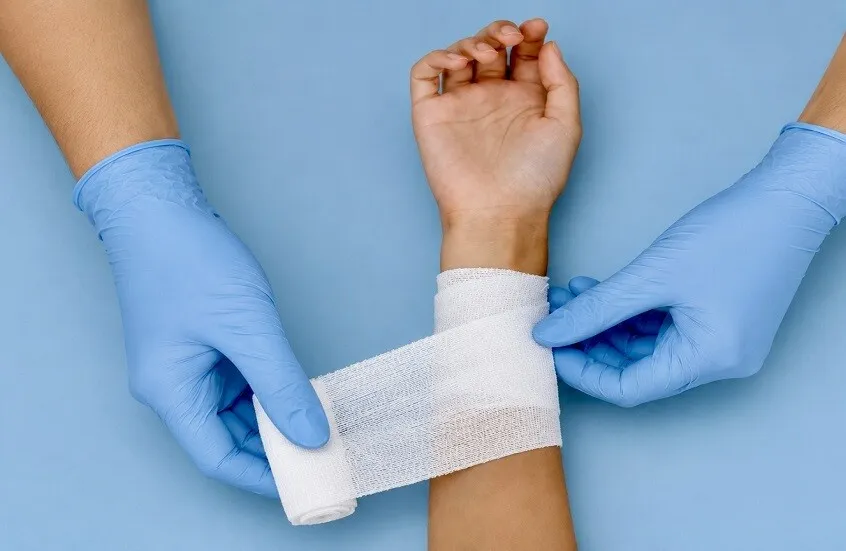
A team of researchers from Peter the Great St. Petersburg Polytechnic University, in collaboration with the Nano Physics Center at the ITMO University, has developed a novel biomaterial aimed at treating damaged skin tissues caused by bacterial and fungal infections.
According to a study published in the journal Applied Surface Science, the newly developed material exhibited potent antibacterial and antifungal activity when tested on mice. The material also showed a high degree of adaptability to skin structure, while no significant side effects were observed during the experiments.
The researchers believe that biocompatible polymeric materials could serve as an advanced alternative to conventional wound dressings, which typically consist of an adhesive layer and a fabric pad. Certain properties of these polymers may enable controlled healing of the epidermis, the outermost layer of the skin.
The innovation consists of a biocompatible membrane designed to treat epithelial tissue damage. The membrane is based on polyvinyl alcohol, a material already widely used in the manufacture of surgical sutures, contact lenses, and food packaging.
Researcher Evgeniya Bochkareva explained that the membrane's antimicrobial and antifungal activity stems from the incorporation of nanostructured copper-based metal-organic frameworks known as HKUST-1, which have previously demonstrated effectiveness against common pathogens.
"The uniqueness of the production technology lies in determining the optimal ratio between the polymer matrix and HKUST-1 nanocrystals, ensuring a synergistic effect and high biocompatibility of the experimental material," Bochkareva said.
The new material proved effective against several common pathogenic bacteria, including Escherichia coli and Bacillus subtilis. It also demonstrated antifungal activity against species such as Saccharomyces cerevisiae, Rhodotorula rubra, and Saccharomyces boulardii. Although these fungi are generally harmless to humans, they are frequently used as model organisms in laboratory studies to evaluate the efficacy of chemical compounds.
Alexander Timin, head of the Laboratory of Nano- and Microencapsulation of Biologically Active Substances at the university, noted that the material is suitable for large-scale production and that its manufacturing technology could be further optimized for industrial applications.