“Water in the Desert”: air to drinking water
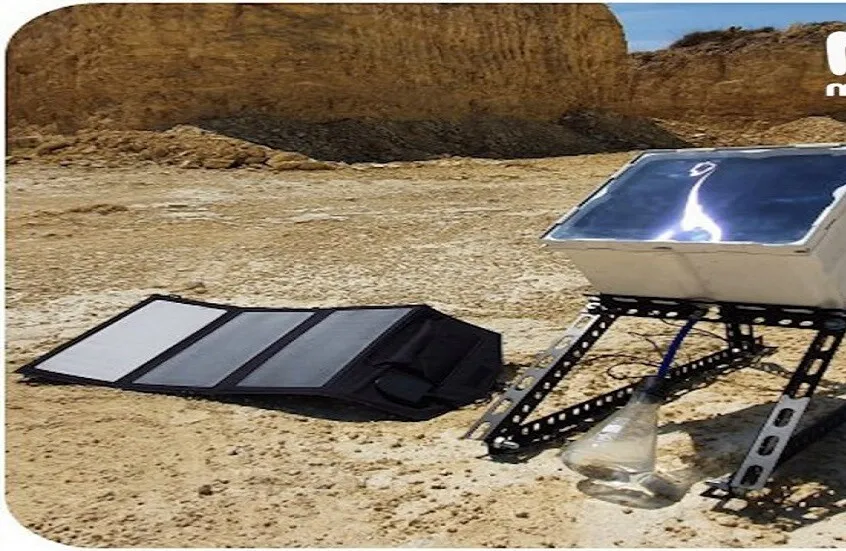
Scientists from the Russian engineering company “Air Spring” have developed a unit capable of producing up to 1,000 liters of drinking water from atmospheric air per day, according to the press office of the Human Capital Development Foundation.
The system operates at temperatures ranging from +12°C to +60°C. The technology has been tested in the arid climates of Uzbekistan and India and has now entered the pilot commercialization stage.
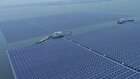
Project developer Dr. Sergei Dorgiyev said a single unit can produce up to 1,000 liters of water per day, enough to meet the needs of small settlements, remote military or exploration bases, tourist camps and small industrial facilities. The system can also operate independently using solar panels and withstand extreme temperatures.
The technology, named “Water in the Desert,” underwent technical tests for extracting water from atmospheric air in Uzbekistan in 2024 and India in 2025. The project is currently undergoing pilot commercialization with a ready-to-market version of the product.
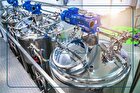
The system uses a multi-stage condensation cycle combined with pre-treatment of the incoming air. Outside air first enters a conditioning unit, where the system selects either sequential or parallel processing depending on environmental conditions. The air is then directed over cooling plates, where water vapor condenses into liquid water.
The processed air subsequently passes through a heat exchanger, transferring its remaining cooling capacity to the incoming air stream. According to the developers, this process reduces energy consumption to 0.4–0.7 kilowatt-hours per liter of water produced.
One of the system’s key features is its dual-circuit cooling design, which expands the equipment’s operating temperature range. Dorgiyev said the system maintains high efficiency at temperatures between +12°C and +60°C, while comparable foreign systems, including Israel’s Watergen, India’s MEGHDOOT Magnum+ and China’s AtmosWell, generally operate efficiently at temperatures between +25°C and +40°C.
These characteristics could make the technology suitable for arid and semi-arid regions across the Middle East, Central Asia and Africa, particularly areas where nighttime temperatures are around +15°C, daytime temperatures can reach +60°C, and absolute humidity ranges from 5 to 8 grams per cubic meter.