Wireless skin sensor enables at-home monitoring of skin disorders
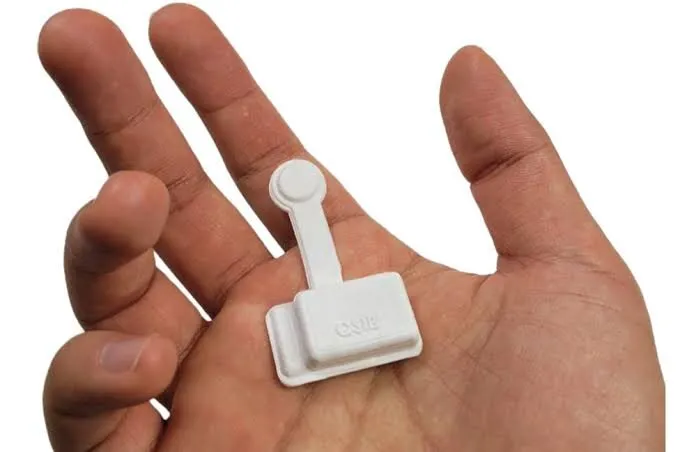
Scientists at Northwestern University have developed a compact wireless skin sensor designed to continuously monitor the mechanical properties of soft tissue, offering a promising solution for the early detection and remote management of skin-related disorders.
The wearable device is placed directly on the patient's skin, where it measures tissue elasticity, stiffness, and resistance to pressure. The collected data are then transmitted wirelessly to healthcare providers, allowing physicians to assess disease progression remotely and reducing the need for frequent in-person clinical visits.
According to Ann Marie Flores, a member of the research team, the sensor's small size and ease of use make it well suited for home-based care, particularly for patients requiring long-term monitoring. She noted that the system is designed to send clinical data directly to physicians, supporting more accessible and continuous patient care.
The device operates by generating controlled vibrations through an integrated accelerometer. By analyzing the amplitude and frequency of these vibrations, researchers can assess changes in the biomechanical properties of the skin and underlying tissue.
Lead researcher Min-Seung Jo said the wireless transmission capability allows clinicians to analyze vibration data remotely, providing valuable information about tissue condition without requiring patients to visit healthcare facilities.
The sensor has been validated in patients with cancer-related lymphedema and systemic sclerosis (scleroderma), a rare autoimmune disease characterized by excessive collagen production that causes abnormal skin thickening.
The research team found that the device's larger contact area enables deeper tissue assessment and improves the evaluation of disease severity and progression. The sensor also demonstrated stronger agreement with clinical findings than comparable commercially available devices.
Unlike conventional techniques, particularly bioimpedance spectroscopy, the new sensor was sensitive enough to distinguish between three different stages of lymphedema.
Researchers also reported that its larger sensing surface improved the accuracy of skin stiffness measurements during muscle movement and relaxation, highlighting its potential for continuous home-based monitoring of chronic skin and soft tissue conditions.