Study finds bidirectional link between media use for emotion regulation and children’s executive functions
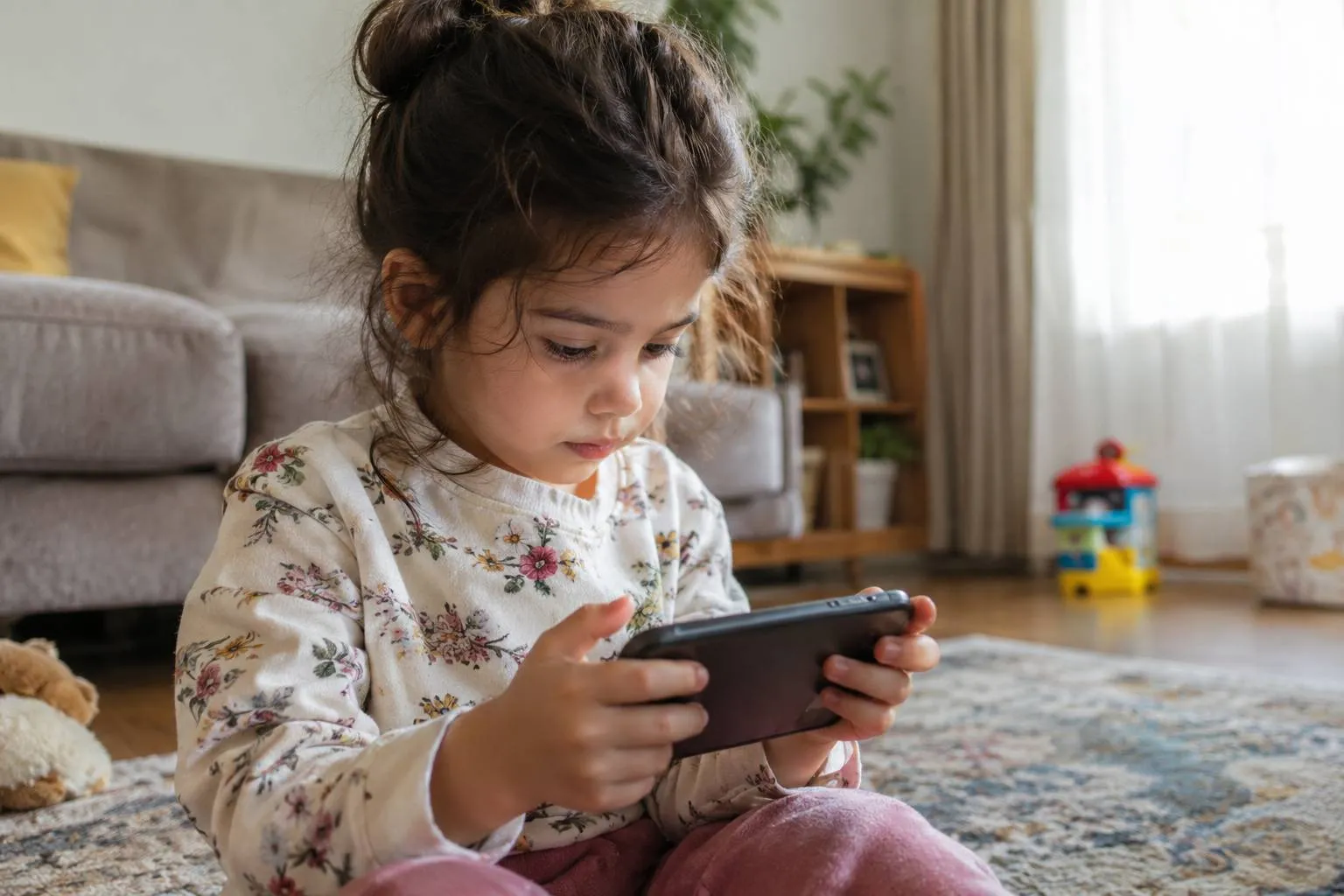
The study, titled “Media Emotion Regulation and Executive Functions: Individual Differences in Temporal Ordering among Young Children,” examined two key executive functions: cognitive flexibility and inhibitory control. Using data from six waves of the M.E.D.I.A. Project, researchers followed children from approximately 2.5 to 7.5 years of age.
The researchers identified three distinct temporal patterns. Among the children studied, 87.36% showed a bidirectional pattern, 7% showed a pattern in which media-based emotion regulation preceded changes in executive functioning, and 6% showed a different temporal pattern.
The researchers also found that parental depressive symptoms were associated with the likelihood of children falling into different patterns. Higher levels of parental depressive symptoms were associated with a lower likelihood of belonging to the bidirectional group and a higher likelihood of belonging to the group in which media-based emotion regulation preceded changes in executive functioning.
The researchers emphasized that these findings do not establish a causal relationship between media use and the development of executive functions. Instead, the study examined the temporal ordering of the two phenomena.
Jane Shawcroft, PhD, an assistant professor in the School of Communication at The Ohio State University and one of the study’s authors, spoke with Anatech about the research and answered questions about the findings.
What might explain the bidirectional relationship between media use for emotion regulation and children’s executive functions?
Bidirectional relationships tell us that parents and children together shape what parenting and development look like. It isn’t simply that parents are parenting in one particular way; they are also responding to the behaviors and characteristics of their children and adapting their approach accordingly.
Can parents recognize any signs that a child is becoming reliant on media to regulate their emotions?
When it’s the only thing that works. Using media can be very effective at calming children, but it is probably better used as a last resort or in emergency situations, such as at an airport.
What might explain the link between parental depressive symptoms and the “Media Emotion Regulation Driven” group?
We found that parents who were struggling with poorer mental health were less likely to show a bidirectional relationship between media emotion regulation strategies and children’s executive functions. Instead, they were more likely to show a pattern in which media emotion regulation preceded changes in executive functions, while children’s executive functions were weaker predictors of media emotion regulation.
This suggests that parents with higher levels of depressive symptoms may not be adapting their parenting to their child as much. This is probably because they are working to cope with their own emotions and need additional support to remain responsive to their child.
Did you find any differences between types of media, such as television, smartphones, and tablets?
We didn’t look at that, but that’s a great idea for a follow-up study.
As AI-powered and interactive apps become more common, could they create different patterns of media emotion regulation in children?
That’s an interesting question. Optimistically, perhaps a helpful use of AI could be to coach children through other emotion-regulation strategies when they are upset. But we know that interactions with other humans are the bedrock of healthy child development. So, while AI could certainly be used to help children regulate their emotions, I’m skeptical that it would be as beneficial as a parent or other caregiver.
What are the main limitations of this study?
Our sample size was small, so I’m looking forward to continuing to work on this type of research and replicate what we found.
What should future research examine next?
So many things! So many parents are trying to figure out how to raise healthy children in our digital world, but we’re increasingly finding that what makes technology “healthy” depends a lot on the context. Figuring out how we can fit technology use into different contexts is one of the next areas I’m excited to work on.