New drug nearly doubles survival in pancreatic cancer
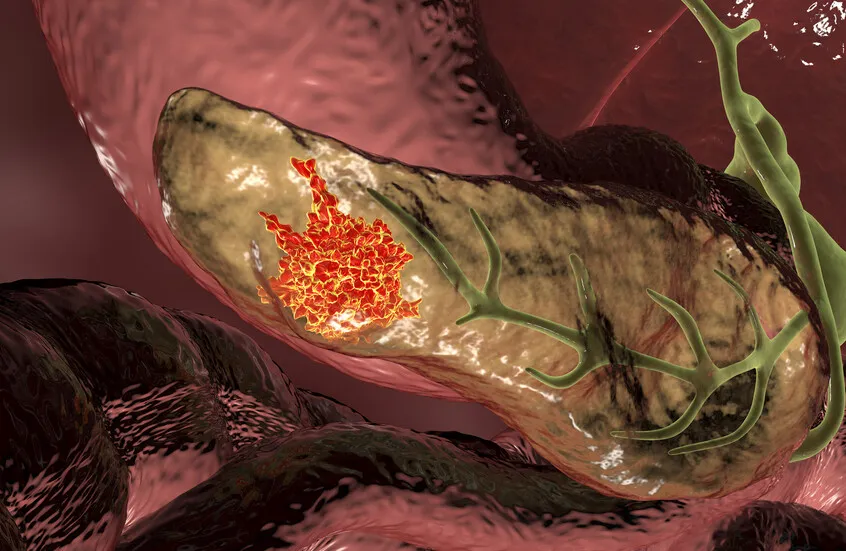
The U.S. Food and Drug Administration (FDA) on Wednesday approved daraxonrasib, a targeted therapy designed to inhibit the cancer-associated KRAS protein. Mutations in the KRAS gene are found in about 90% of pancreatic cancer cases.
The approval covers patients with metastatic pancreatic cancer, in which the disease has spread to other organs, following chemotherapy. Patients take two tablets of the drug each day.
A clinical trial involving around 500 patients with metastatic pancreatic cancer found that median overall survival reached 13.2 months among those treated with daraxonrasib, compared with 6.7 months for patients receiving standard chemotherapy.
The drug therefore extended survival by an average of about six months among trial participants, while some patients remained alive for years after starting treatment. Patients receiving daraxonrasib also experienced less severe side effects than those in the chemotherapy group. The most common side effects included rash, diarrhea, fatigue and nausea.
Targeting a cancer-linked mutation
Daraxonrasib works by targeting the KRAS protein, whose mutations play a major role in the growth and spread of several cancers, including pancreatic cancer.
The drug is designed to block KRAS activity, thereby disrupting signals that enable cancer cells to grow, divide and spread. Targeting KRAS represents a significant development in pancreatic cancer treatment because mutations in the gene are present in the vast majority of cases.
Dr. Brian Wolpin, who led the clinical trial at the Dana-Farber Cancer Institute in Boston, said while presenting the findings at the annual meeting of the American Society of Clinical Oncology that the drug could allow physicians to help patients with metastatic pancreatic cancer in ways that were previously unavailable, while improving both survival prospects and quality of life.
“I have never seen anything like this before in the trials we have conducted in pancreatic cancer,” Wolpin said.
A cancer that is difficult to detect early
Pancreatic cancer remains a major challenge for physicians not only because of its aggressive nature but also because it is difficult to diagnose in its early stages. Initial symptoms can be mild and nonspecific, including back pain, indigestion, unexplained fatigue, and yellowing of the eyes or skin.
As a result, the disease is often diagnosed only after it has spread beyond the pancreas. At that stage, surgery—which is the only treatment that can potentially achieve a cure for some patients—is no longer possible in many cases.
According to the American Cancer Society, only about 12% of people diagnosed with pancreatic cancer survive for five years. The organization estimates that approximately 67,000 new cases are diagnosed in the United States each year, while around 52,000 people die from the disease.
Drug to enter the market
Revolution Medicines plans to market daraxonrasib under the brand name Rasonque, although the company has not yet announced its price.
More than 2,000 patients have received the drug free of charge since May through the FDA's expanded-access program.
The company said patients currently receiving daraxonrasib through the expanded-access program will eventually transition to obtaining the treatment through their private insurance providers.
Although daraxonrasib is not a cure for pancreatic cancer, the clinical trial results provide patients with metastatic disease with a new treatment option at a time when effective therapies have remained limited for many years.