Can technology replace firefighters?
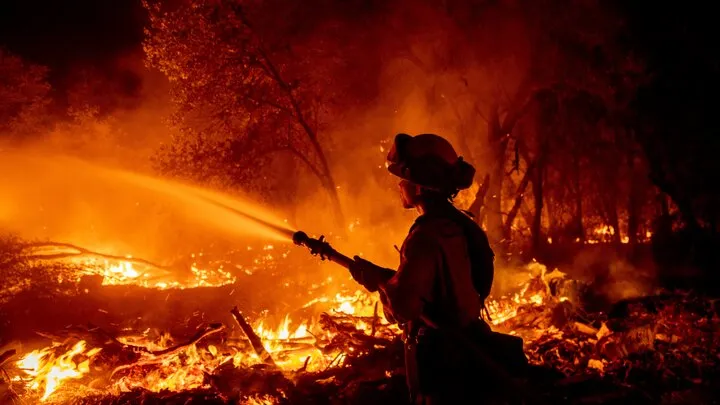
As large wildfires devastate parts of countries such as France, artificial intelligence-powered cameras and drones are helping authorities detect fires around 15 minutes earlier than human spotters, creating a crucial window for intervention before flames spread.
According to the BBC, these technologies can shorten response times and help assess risks, but experts say they are not yet capable of tackling large-scale fires or withstanding the physical demands of ground operations. Human crews remain essential for carrying hoses through difficult terrain and completing the work begun by aircraft and automated systems.
AI Replaces Human Fire Lookouts
France’s Gironde region has faced severe wildfires this summer, producing familiar and alarming scenes: huge flames being tackled by firefighters and aircraft dropping water over burning areas.
Hundreds of thousands of people in France, Spain and Portugal have been forced to leave their homes as wildfires have swept through forests and rural communities. In France, four firefighters have so far died while battling the fires, while around 150 others have been injured.
In Gironde, cameras have replaced human fire lookouts—many of whom were students stationed in observation towers during the summer months. Authorities say the shift to automated monitoring has also reduced the number of false alarms.
AI-powered cameras can distinguish with a high degree of confidence between genuine fire smoke and dust generated by a tractor working in a field. They also have a substantial detection range, allowing fires to be identified from distances of up to 20 kilometers.
Critical Minutes for Saving Forests
Rapid fire detection is crucial because once flames begin to spread, controlling them becomes significantly more difficult.
As soon as the monitoring systems detect a fire, an alert is sent to firefighters’ phones. They can open the application and view the camera feed, with images magnified up to 40 times.
The difference can be measured in minutes: after one minute, a fire may be extinguished with little more than a glass of water. After two minutes, a water tanker may be required. After three minutes, a Canadair firefighting aircraft may need to be deployed.
Canadair aircraft are amphibious planes capable of collecting water from rivers, lakes or the sea and dropping it over fires. Fire-monitoring cameras are now being used to monitor around one million hectares of land, primarily in France.
Smart Drones Are on the Way
AI-based wildfire detection is expected to become more advanced in the coming years.
France’s civil protection authorities are developing a program known as Condor, which is testing solar-powered drones equipped with electro-optical cameras and artificial intelligence. The drones are designed to conduct continuous patrols and monitor large areas.
Other projects are taking a different approach by placing sensors among trees. In Spain, for example, the SenForFire project is designed to detect gases released before flames become visible, potentially providing an even earlier warning of an emerging wildfire.
Why Haven’t Robots Replaced Firefighters?
A French firefighter says drones have already been tested in some operations, including maritime rescue, where they can deliver life rings or emergency supplies. But drone technology has not yet reached the point where it can perform large-scale firefighting operations.
For now, the role of technology in wildfire response remains limited. It can help detect fires, monitor conditions and provide critical information, but it cannot replace the people who carry hoses through forests and directly fight the flames.
When a Canadair aircraft drops 6,000 liters of water on a fire, it can significantly reduce the intensity of the flames. But ground crews must then take over and finish the job.
Firefighting Aircraft and Drones
France also relies on Dash aircraft, which can spread ammonium phosphate-based fire retardant, often seen as an orange powder, ahead of advancing flames. The retardant helps slow the ignition of vegetation and creates a barrier that can limit the fire’s spread.
A Canadair aircraft can drop up to 6,000 liters of water in a single pass.
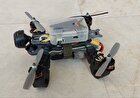
Companies are also developing drones capable of carrying specialized fire-suppression devices. Some designs use heat-triggered charges that disperse chemical powders over a targeted area, helping suppress flames by cooling the fire and disrupting the combustion process.
Technology Could Make Firefighting Safer
French researchers are also developing drones capable of flying close to active flames.
The objective is not necessarily to extinguish fires directly, but to collect critical information about fire conditions, including smoke hazards, sudden weather changes and the risk of falling trees or collapsing burning structures.
Such data could help identify hazards before firefighters enter dangerous areas, potentially making operations safer and more effective.
Technology is already helping firefighters detect wildfires faster and respond more efficiently. In the future, it may also reduce the risks they face.
But replacing firefighters altogether appears unlikely. It is still people on the ground who carry the hoses, confront the flames and ultimately bring fires under control. That basic reality has remained largely unchanged since the emergence of the first modern firefighting organizations in the Netherlands in the 1670s—and it is unlikely to change anytime soon.